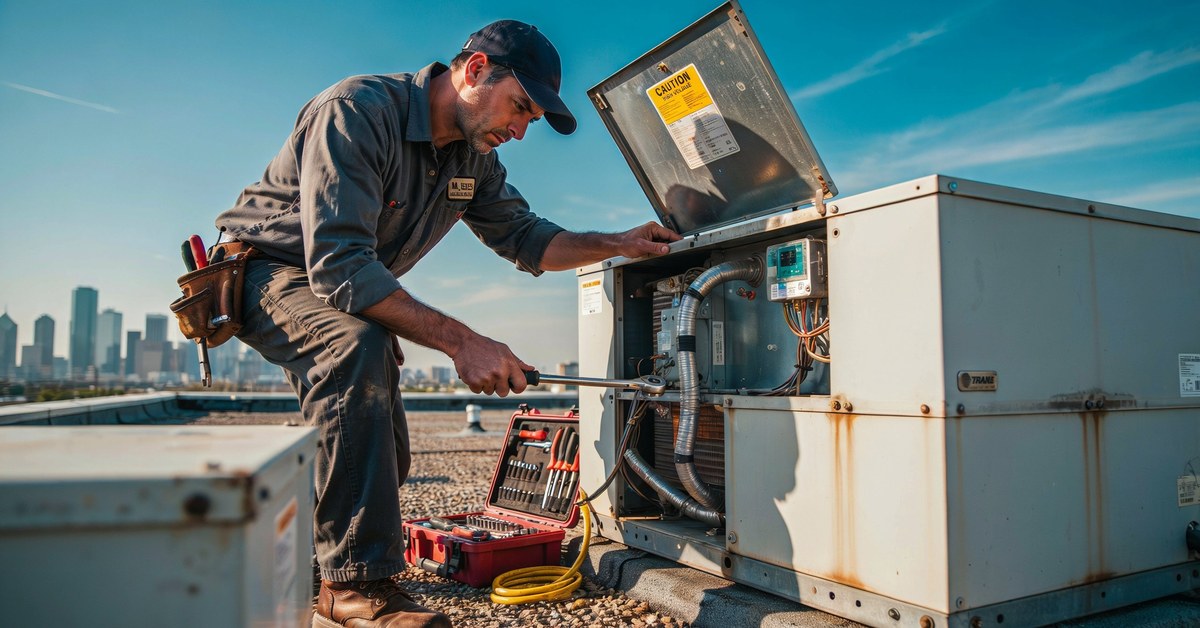
You are on a job. Your phone rings. You cannot answer.
By the time you call back, the customer has already moved on.
That is not a bad-luck situation. It is the most common way service businesses lose work. Industry data shows that 85 percent of callers who reach voicemail simply hang up and call the next business in their search results. They do not leave a message. They do not try again. They move on.
If your business misses five calls a week at an average job value of $300, that is roughly $78,000 in lost revenue every year. Most of it happens not because the customer was impatient, but because the window to respond is far shorter than most people realize.
Research shows that 67 percent of callers who do not reach a business on the first try have already booked a competitor by the time the original business calls back. The average callback delay across home service businesses is over four hours.
The phone is not your bottleneck. The gap between the missed call and the first response is.
The Cost Adds Up Faster Than Most People Realize
Run the numbers on a busy week. If your business takes 30 calls and misses 8 of them, that is about 27 percent of your inbound volume going unanswered. If 85 percent of those 8 callers never call back, you just lost 6 to 7 potential customers in a single week.
At a $400 average job value, that is $2,400 to $2,800 a week. Over a year, that compounds to well over $100,000 in revenue that walked out the door not because a competitor outworked you or undercut your price, but because nobody sent a text in time.
The system that fixes this costs a fraction of that and runs without you having to think about it.
How Missed Call Recovery Works
The fix is not an answering service. It is not a virtual receptionist. It is a simple automated text message that fires within 60 seconds of every missed call.
When your phone goes unanswered, the caller receives a text from your business number. Something like: "Hey, this is [Business Name]. Sorry we missed you. We would love to help. What is the best time to reach you?"
That is it. One text. Sent automatically. No action required from you.
The text does two things. First, it acknowledges the caller before they have had time to dial the next number. Second, it gives them an easy way to respond on their own terms instead of waiting on hold or leaving a voicemail they assume nobody will hear.
Most callers respond within minutes. The ones who were casually shopping will often book the business that responds fastest, regardless of price.
Want this running for your business? We handle the entire setup.
Let's Get Started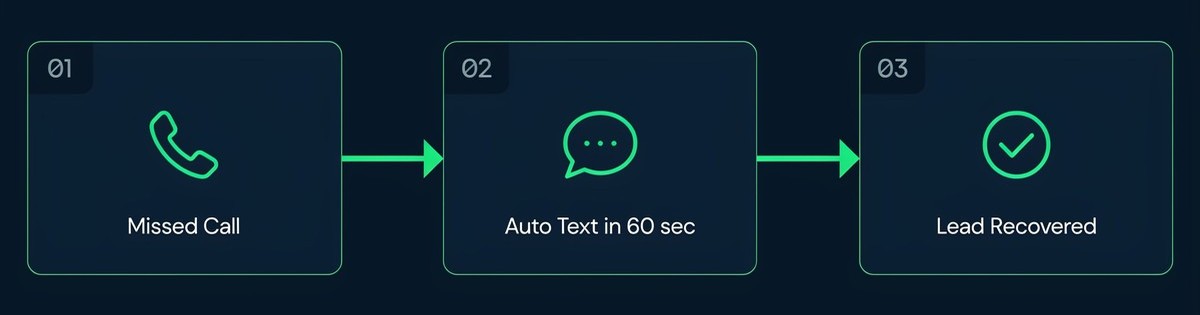
What You Actually Need to Set This Up
Here is what surprises most service business owners: this system does not require any new software. It runs on Google Workspace tools you already have.
A Google Voice number tied to your business handles the incoming calls. When a call goes unanswered, a trigger fires. A script built inside Google Apps Script sends the automated text through your existing Google account. Everything is logged to a Google Sheet so you can see every missed call and what happened after.
No Twilio account. No CRM subscription. No monthly platform fee on top of what you are already paying. If you use Gmail for business, you already own the tools this system runs on.
See the full list of 10 automation systems built for service businesses, or see how the build process works.
The Time It Takes to Respond Still Matters
Sending a text in 60 seconds gets you in front of the caller before they move on. But the follow-up after that matters too.
If a caller responds to your text and says they need a quote, responding within five minutes converts at eight times the rate of responding within an hour. The same principle that makes the initial text powerful applies to every touchpoint after it.
The businesses winning the most work in competitive markets are not always the best at the trade. They are the fastest to follow up. That is a systems problem, not a skills problem.
Why Most Service Businesses Do Not Fix This
Most service business owners know they miss calls. Most have thought about fixing it. The reason they do not is the setup feels like a project for a slow week that never comes.
That is where done-for-you automation changes the equation. The system is built once, runs permanently, and requires no ongoing effort from the business owner. You stay on the job. The system handles the follow-up.
One less thing to think about. One more lead that stays alive long enough to become a customer.
See pricing for the First Response tier: one system, no setup fee, $47 a month. Most service businesses recover the cost in the first job the system saves.